
Hazardous Trees and Hanging Branches
A Hazardous Tree Does Not Wait for a Convenient Time to Fall
Dead limbs, storm-split trunks, and trees leaning toward your home do not fix themselves. West Roots Tree Service provides safe, professional hazardous tree removal throughout the Greater Grand Rapids area. We respond quickly, assess the full risk, and remove the threat before it causes damage or injury.
35+ Five-Star Reviews
Hazardous Tree Removal Reviews
West Roots goes above and beyond in their service. Chase and Corey are great people and knowledgable about trees. This company is fairly new and it is evident that they are out to show our community how great they are. My wife and I couldn’t have been more impressed with their service – and clean up afterward was phenomenal.
After a storm caused a tree to snap and fall on our property, this team responded quickly and did an excellent job. Competitive pricing, on-time service, and a thorough cleanup when the work was done. Professional, efficient, and easy to work with. Highly recommend!
Professional Hazardous Tree Removal in West Michigan
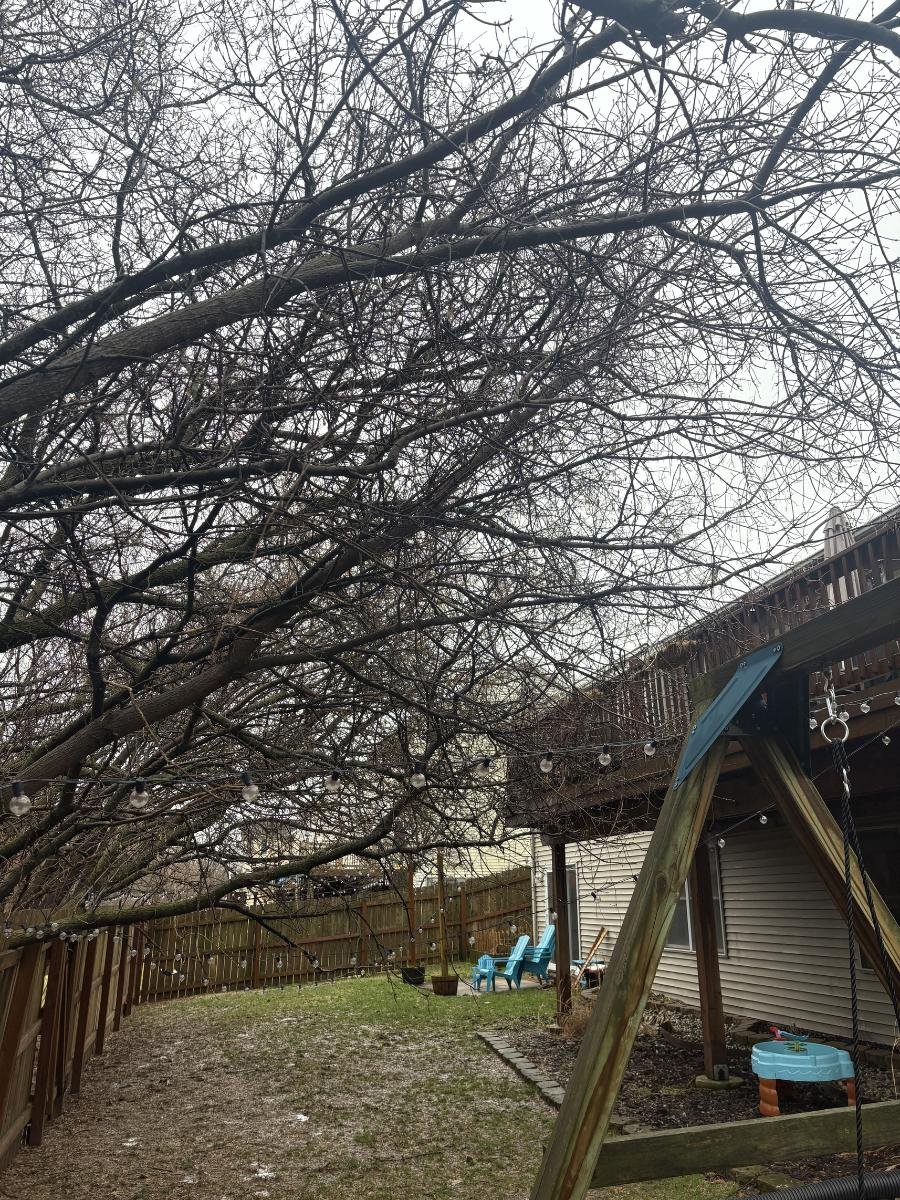
Hazardous tree removal is not the same as standard tree removal. A hazardous tree, or a tree with failing branches, requires a higher level of assessment, planning, and execution. The margin for error shrinks significantly when a tree is leaning toward your home, a branch is suspended overhead after a storm, or root failure is already underway.
Every hazardous tree job at West Roots begins with a thorough on-site evaluation. We assess:
- The type and extent of structural damage or decay
- The direction and degree of lean toward structures
- Hanging or partially attached branches and the weight load they carry
- Root system integrity and signs of soil heaving or shifting
- Proximity to your home, garage, driveway, fence, and utility lines
- Ground access for equipment and debris removal
Based on that assessment, we develop the safest removal strategy for your specific situation. Our goals on every hazardous tree job:
- Prevent damage to your home, structures, and vehicles
- Eliminate the immediate risk to people on and around your property
- Protect the surrounding landscaping you want to keep
- Remove debris completely so your yard is clean when we leave
Hazardous situations are given scheduling priority. If a tree or branch poses an immediate threat, reach out and we will work to get on-site as quickly as possible.
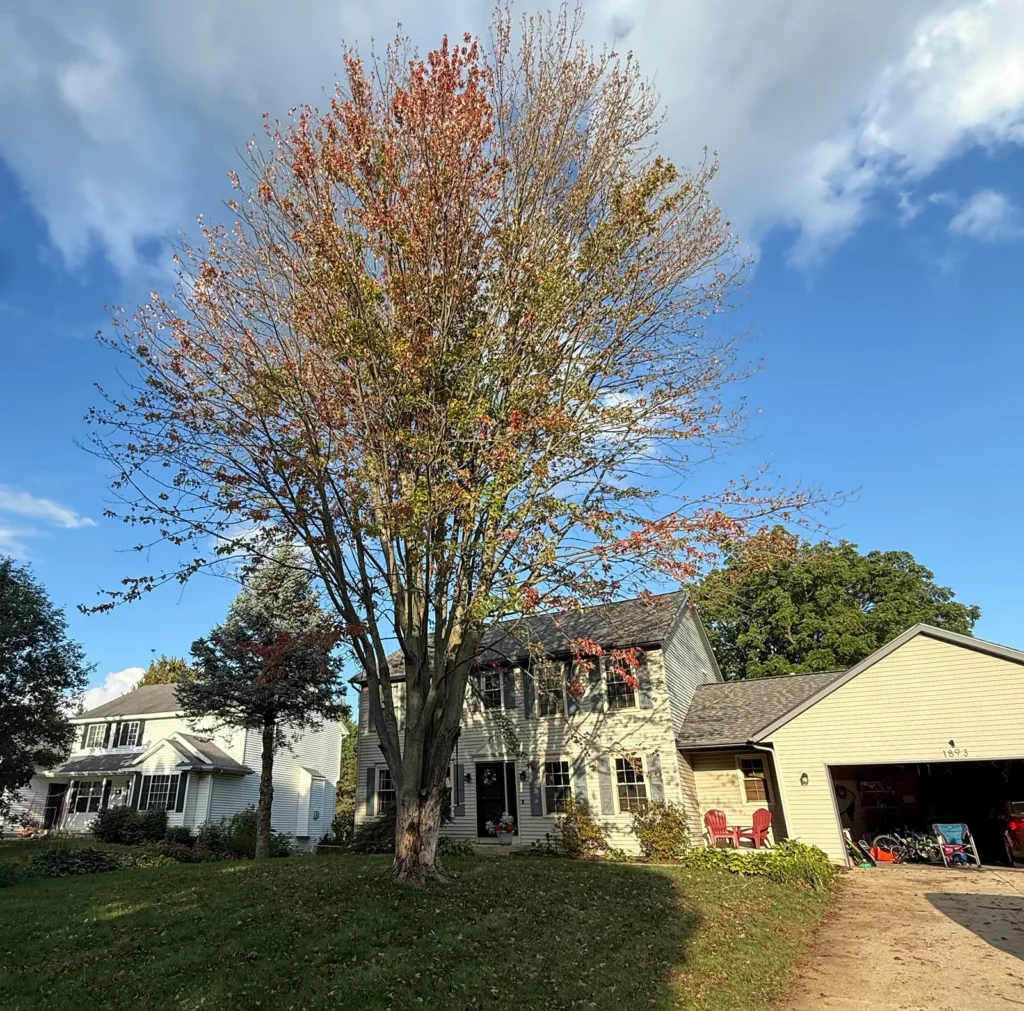
Common Reasons Homeowners Call Us
Hazardous trees and failing branches come in many forms. Here are the situations West Michigan homeowners call us about most often, and what you should know about each one.
Hanging Branches and Widow Makers After a Storm
A branch that is partially broken but still attached to the tree is one of the most dangerous conditions on a residential property. These suspended limbs are called widow makers for good reason. They can fall without warning, sometimes days after the storm that created the break.
- Hanging branches must be assessed carefully before any work begins underneath them
- We use rigging and controlled lowering to bring down suspended limbs safely
- The rest of the tree is evaluated at the same time to identify other weakened branches
Trees That Are Leaning Toward Your Home or a Structure
A tree that is leaning toward your house, garage, fence, or driveway is a property damage risk. The closer the lean, the less reaction time you have if the tree fails.
- Lean combined with root damage or soil heaving indicates a higher risk of sudden failure
- We use directional felling and rigging to control where sections land
- Proximity to your structures directly affects how we plan and price the job
Dead or Severely Decaying Trees
Dead trees lose structural integrity progressively. What holds together in calm weather can fail in wind, rain, or ice. A tree that appears stable may have advanced internal decay that is not visible from the ground.
- We assess root system health and the extent of internal decay before removal
- Dead wood is unpredictable and requires deliberate, careful cutting sequences
- Stump grinding can be added to the job so you have clean, usable ground afterward
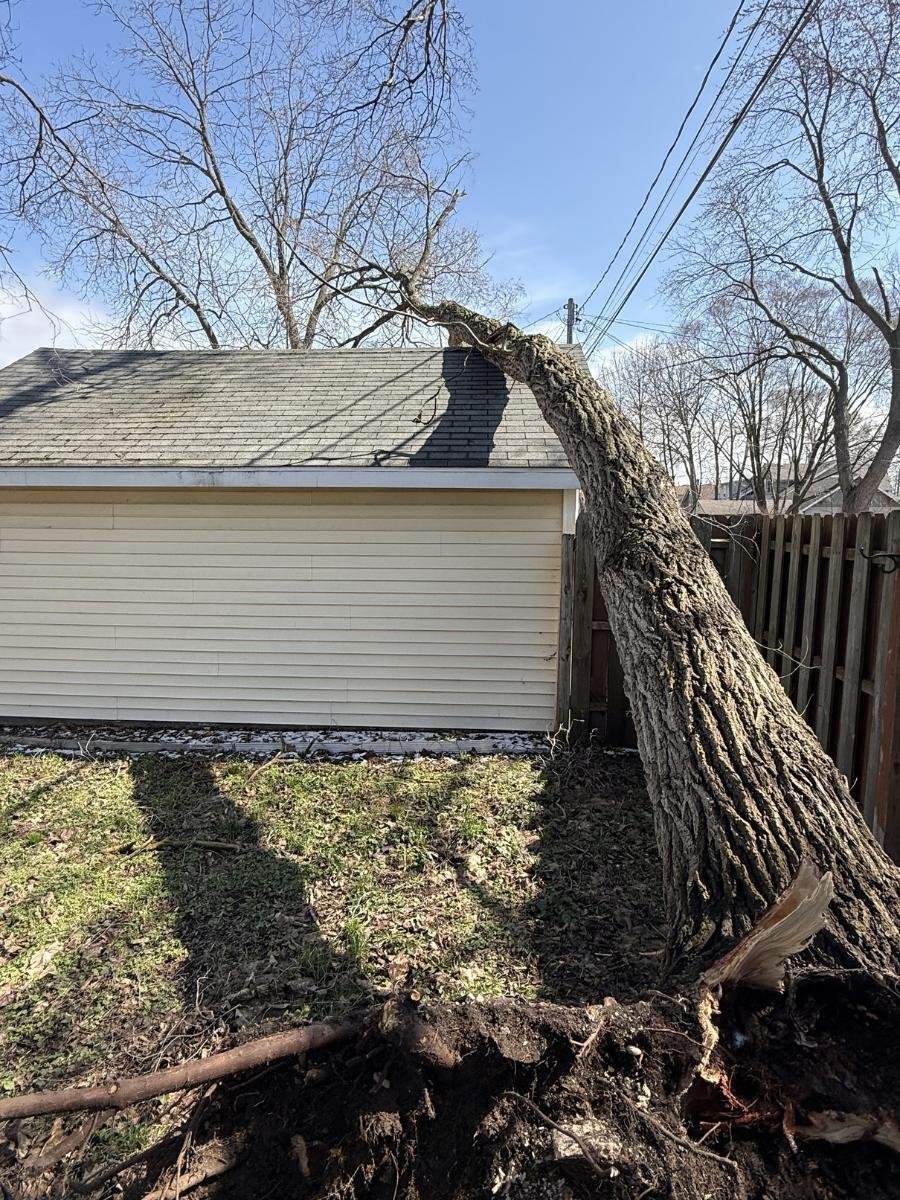
Storm-Damaged Trees with Split Trunks or Broken Crowns
A tree that loses its crown or suffers a trunk split in a storm is often beyond saving. Even when the main trunk is standing, a split or fractured crown changes the structural balance of the entire tree and increases the chance of the remaining section failing later.
- We evaluate whether the remaining structure is stable enough to allow climbing or requires aerial lift access
- Crown removal is often the first step before addressing the trunk and root area
- We will tell you honestly whether the tree can be trimmed to safety or whether removal is the right call
Root Failure and Soil Heaving
When the soil around the base of a tree begins to lift, crack, or shift, it is a visible sign that the root system is compromised. Root failure can cause a tree to fall with very little external force.
- Soil heaving at the base of a tree is a serious warning sign that should not be ignored
- We assess the extent of root damage during the property evaluation
- Root proximity to foundations, sidewalks, and driveways is factored into the removal plan
Trees Growing Into or Near Power Lines
A tree that has grown into utility lines is not only a hazard to your property. It is a fire and electrocution risk. These jobs require specific techniques and, in some cases, coordination with your utility provider.
- We work safely around utility lines using industry-standard procedures
- Line proximity is identified during your estimate so there are no surprises on the job day
- We coordinate with utility providers when the scope of the work requires it
Hazardous Tree Removal Across West Michigan
- Allendale
- Hudsonville
- Grandville
- Wyoming
- Grand Rapids
- Walker
- Grand Haven
- Holland
- Byron Center
- Ada
- Belmont
Why Homeowners in West Michigan Trust West Roots
Hazardous tree removal requires more than a chainsaw and a truck. It requires a team that can accurately assess risk, plan for what can go wrong, and execute the job without causing additional damage to your property.
Fast Response for Hazardous Situations
We prioritize calls involving immediate threats. When a tree is leaning into your home or a widow-maker branch is suspended over your roof, we do not put you at the back of a standard queue. We work to get on-site quickly and eliminate the risk.
Honest Risk Assessment
We will not recommend removal when trimming can solve the problem, and we will not minimize a risk to avoid a difficult conversation. You get a straightforward evaluation and a clear explanation of your options before any work begins.
Exceptional Cleanup
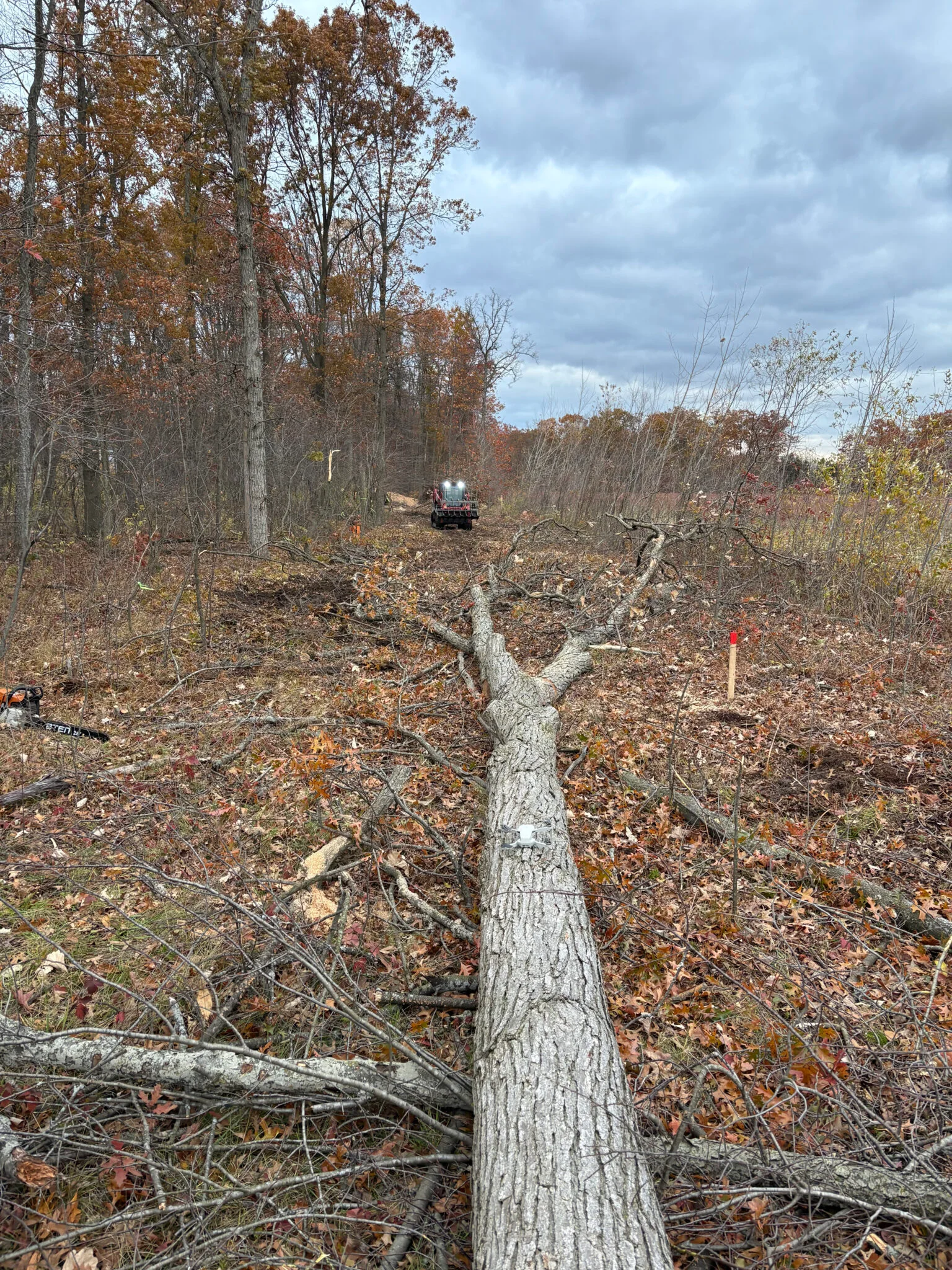
We treat your property like it is our own. That means thorough raking, complete debris removal, and attention to detail before we leave. When we are done, it shows.
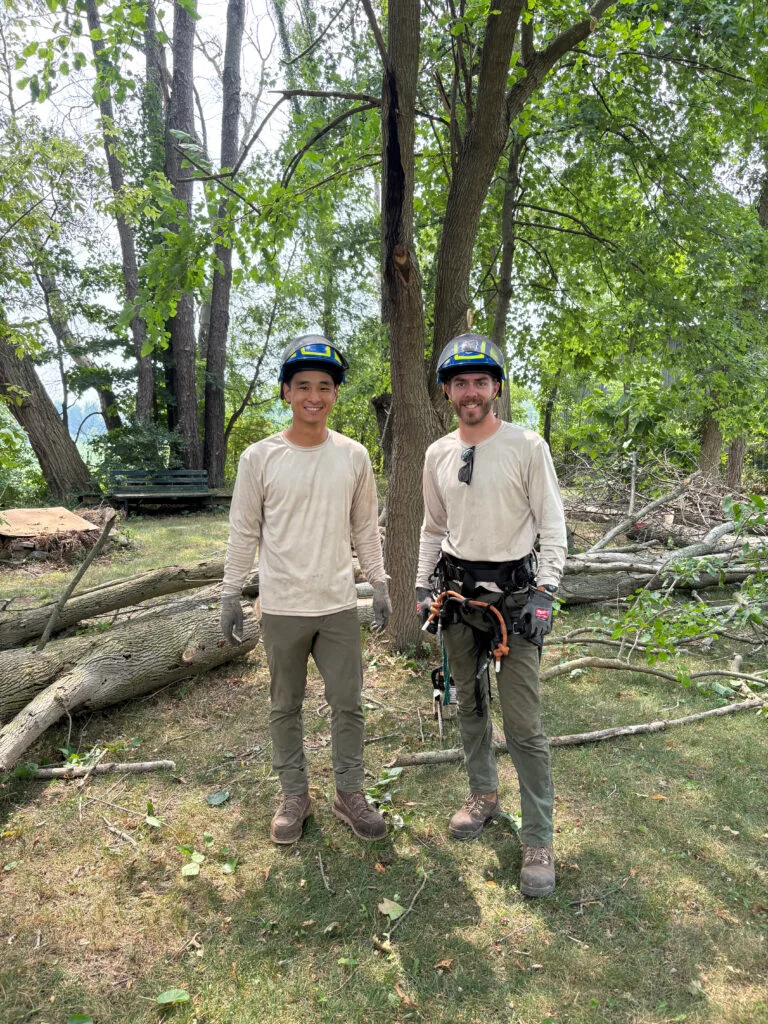
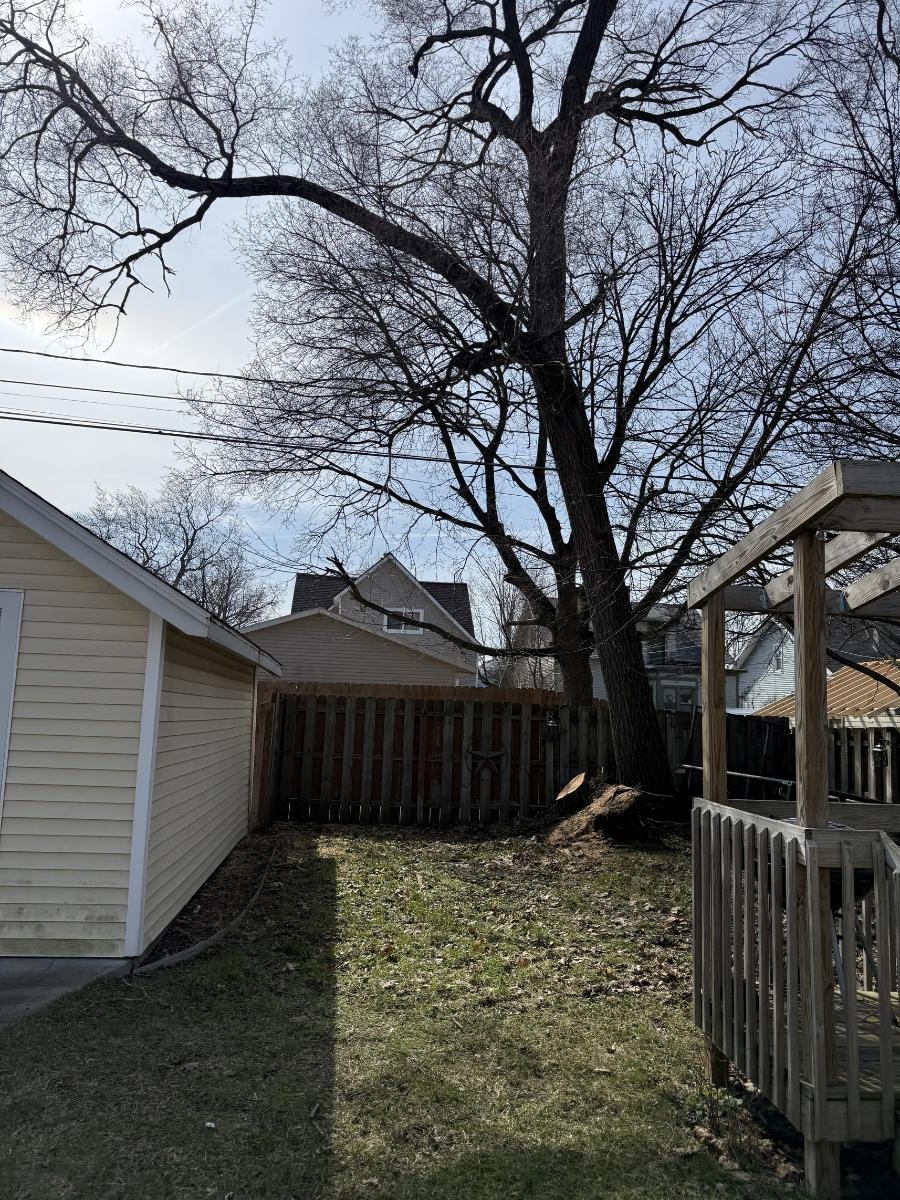
Rooted in Safety, Committed to Your Property.
Hazardous Tree Removal FAQs
What makes a tree hazardous?
A tree is considered hazardous when it poses a risk of causing injury or property damage. Common indicators include visible lean toward a structure, hanging or partially attached branches, advanced decay or dead wood, root failure and soil heaving at the base, or damage from a storm. Not every compromised tree looks dangerous from the street. An on-site evaluation is the most reliable way to determine the actual risk level.
How quickly can you respond to a hazardous tree?
Hazardous and emergency situations are given scheduling priority. We aim to visit your property within 1 to 2 days of your request under normal circumstances. For situations involving immediate threats to your home or family, contact us directly and we will work to respond as quickly as possible.
What is a widow-maker branch?
A widow-maker is a branch that is broken or severely weakened but remains lodged in the tree or suspended in the canopy. These branches are extremely dangerous because they can fall without warning, particularly during wind or additional rain. If you have a hanging or partially detached branch over a walkway, vehicle, or living area, treat it as an immediate hazard and avoid the area until it is removed.
Can a hazardous tree be saved, or does it always need to come down?
Not every hazardous tree needs to be fully removed. In some cases, removing dead branches, reducing crown weight, or cabling weak limbs can bring a tree back to a manageable condition. We will assess the situation honestly and tell you whether full removal is necessary or whether a less invasive approach is a safe option.
Is hazardous tree removal covered by homeowners insurance?
Coverage depends on your specific policy and the circumstances of the removal. In general, insurance is more likely to cover removal when a tree has already fallen and caused documented damage to a covered structure. Removal of a tree that has not yet fallen is typically handled as a property maintenance expense. We recommend contacting your insurance provider directly to understand your coverage before scheduling work.
Who is responsible if a hazardous tree falls on my neighbor's property?
Liability in tree disputes varies by jurisdiction and depends heavily on whether the property owner was notified of the risk beforehand. If a neighbor has made you aware of a hazardous tree on your property and you have not taken action, you may bear greater liability if that tree falls and causes damage. We are not attorneys and cannot provide legal advice, but we can help you document the condition of the tree as part of your estimate process. Addressing the hazard is always the most straightforward path.
Do I need a permit to remove a hazardous tree?
Permit requirements vary by municipality across the Greater Grand Rapids area. Some cities and townships require permits for tree removal depending on the size of the tree or its location. We can help you understand what may be required in your area during the estimate process. In genuine emergency situations where a tree poses an immediate threat to life or safety, local authorities typically allow removal to proceed without delay.
How much does hazardous tree removal cost?
Pricing depends on the specific conditions of the job. Factors that affect cost include:
- Tree size and the extent of structural damage
- Distance from your home, garage, or other structures
- Whether hanging branches require rigging before the trunk can be addressed
- Ground access for our truck and chipper
- Presence of utility lines
- Whether climbing, rigging, or aerial lift equipment is required
We provide free estimates after visiting your property. You will receive a detailed quote by email with no pressure and no surprise fees.
Here’s What Happens Next
- 1. Tell Us About Your Project
Fill out the form with your address, the type of tree service you’re looking for, and any details that will help us understand the job.
- 2. We Schedule a Visit (Fast)
We’ll reach out to set up a time to view your property, typically within 1–2 days. You can be present, or we can assess the trees on our own if that’s more convenient.
- 3. Receive Your Free Estimate
After the site visit, we’ll email you a detailed estimate. We don’t provide pricing on-site, so you have time to review everything clearly and make the right decision.
- 4. Get on the Schedule
Once you approve the estimate, we’ll lock in your service date. On the job day, our crew works efficiently, keeps you informed, and leaves your property clean and cared for.