
TREE DAMAGE AFTER STORM
A Tree Hit Your Property. Here Is What to Do Next.
When a storm sends a tree through your fence, onto your roof, or across your driveway, your first priority is safety. Your second is getting qualified help on site fast. West Roots Tree Service responds to storm-related tree damage across West Michigan, handling removal carefully so the cleanup does not cause more damage than the storm did.
Need emergency help now?
35+ Five-Star Reviews
What Homeowners Say About Our Storm Response
West Roots goes above and beyond in their service. Chase and Corey are great people and knowledgable about trees. This company is fairly new and it is evident that they are out to show our community how great they are. My wife and I couldn’t have been more impressed with their service – and clean up afterward was phenomenal.
After a storm caused a tree to snap and fall on our property, this team responded quickly and did an excellent job. Competitive pricing, on-time service, and a thorough cleanup when the work was done. Professional, efficient, and easy to work with. Highly recommend!
What Happens When a Tree Damages Your Property
Not all storm tree damage looks the same. Some situations are immediately dangerous. Others appear stable but have hidden risks that make them equally urgent. The most important thing you can do when a tree has fallen on or near your home is not attempt to remove it yourself.
Here is why: a tree resting on a structure is under tension. Cutting into it without knowing where the pressure points are can cause sudden movement that damages the structure further, or injures anyone nearby. Safe removal requires assessment first.
When we arrive, we evaluate:
- Where the tree is making contact with the structure and what is bearing the load
- Whether the root system has been fully uprooted or the tree is partially attached
- Whether secondary hazards exist, such as utility lines or compromised branches above
- The safest sequence of cuts and removal to minimize stress on the structure
From there, we build a removal plan before any chainsaw runs.
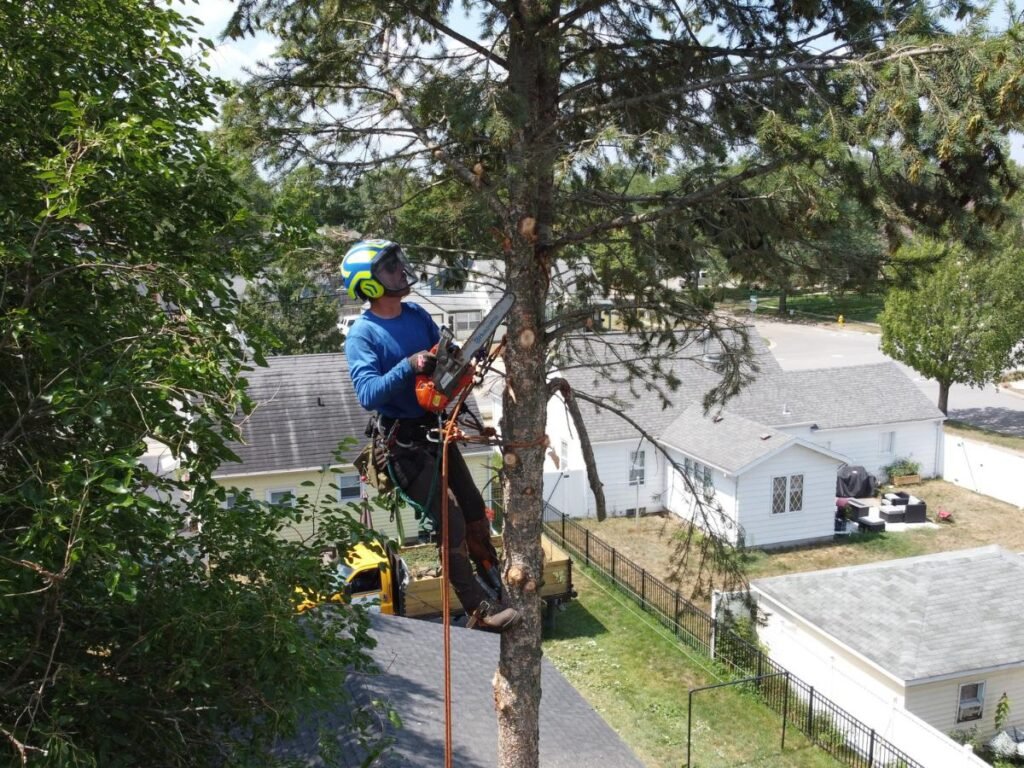
What to Do Right Now if a Tree Has Hit Your Property
While you wait for our team, there are a few steps we recommend. Stay away from the tree and the structure it is resting on, and do not try to cut or move the tree yourself. If a utility line has been contacted, call your utility provider and keep everyone clear of the area. Photograph the damage for your insurance claim, and if your home has structural damage, contact your insurance company to open a claim. Once you have done that, fill out our contact form so we can get to your property as quickly as possible.
Types of Storm Tree Damage We Handle
Please see what handle below
Tree on Your Home or Roof
This is the most urgent situation. A tree or large limb resting on your home needs to be removed without putting additional pressure on the structure.
- We assess load points before making any cuts
- Rigging is used to control where sections land so your roof or walls are not impacted further
- We can work alongside your insurance adjuster and provide documentation for your claim
- Tarping recommendations or coordination with a roofer can be discussed once the tree is cleared
Tree on Your Fence, Garage, or Outbuilding
Structures other than the main house are still a priority. A tree on a garage, shed, or fence often requires the same careful approach as a roof situation, depending on how the weight is distributed.
- Fences and outbuildings can shift under load, so we assess stability first
- We remove the tree and debris in sections to minimize additional structural movement
- Stump grinding is available if the root system needs to be cleared from the area
Split Trunk or Major Limb Failure
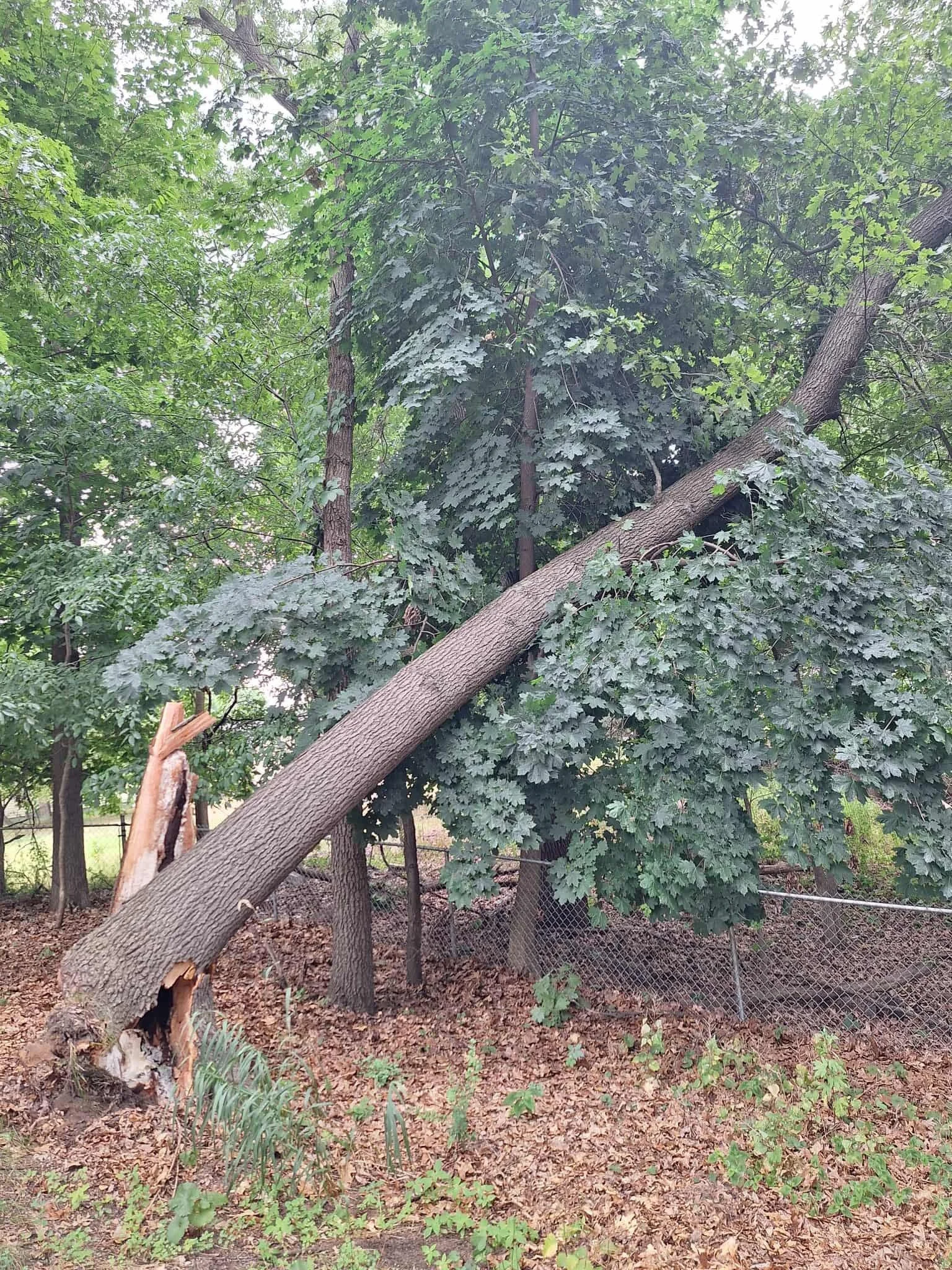
Storms sometimes split a tree rather than topple it entirely. A split trunk or large hanging limb is structurally compromised and can fail unpredictably, especially with continued wind or rain.
- We assess whether the tree can be saved with proper pruning or needs to come down
- Split sections under tension are rigged before cutting to prevent sudden drops
- We will give you an honest assessment of whether removal is necessary or if trimming solves it
Uprooted Tree or Root Failure
Heavy rain combined with high wind can uproot trees that appeared completely healthy. These situations leave behind large root pits and often remove chunks of lawn.
- We remove the tree, root ball, and associated debris
- Stump and root grinding can be added to level the ground
- We assess surrounding trees for root damage or destabilization
Hanging Limbs and Canopy Damage
Not every storm brings a tree all the way down. Broken limbs lodged in the canopy are among the most commonly overlooked hazards after a storm. They are unstable and can fall without warning.
- We inspect the full canopy during our assessment, not just visible ground-level damage
- All hanging, broken, or partially attached limbs are identified and removed
- A thorough canopy inspection is included as part of every storm damage visit
Trimming & Pruning Services Across West Michigan
- Allendale
- Hudsonville
- Grandville
- Wyoming
- Grand Rapids
- Walker
- Grand Haven
- Holland
- Byron Center
- Ada
- Belmont
Why Homeowners Trust West Roots After Storm Damage
We Plan Before We Cut
Removing a tree from a damaged structure is not the same as standard tree removal. We assess load, tension, and surrounding hazards before any work begins. This protects your home and protects our crew.
We Respond With Urgency
Storm damage does not wait. We prioritize calls involving structures and work to get to your property as quickly as possible. You will not be waiting days for a response.
We Leave It Clean
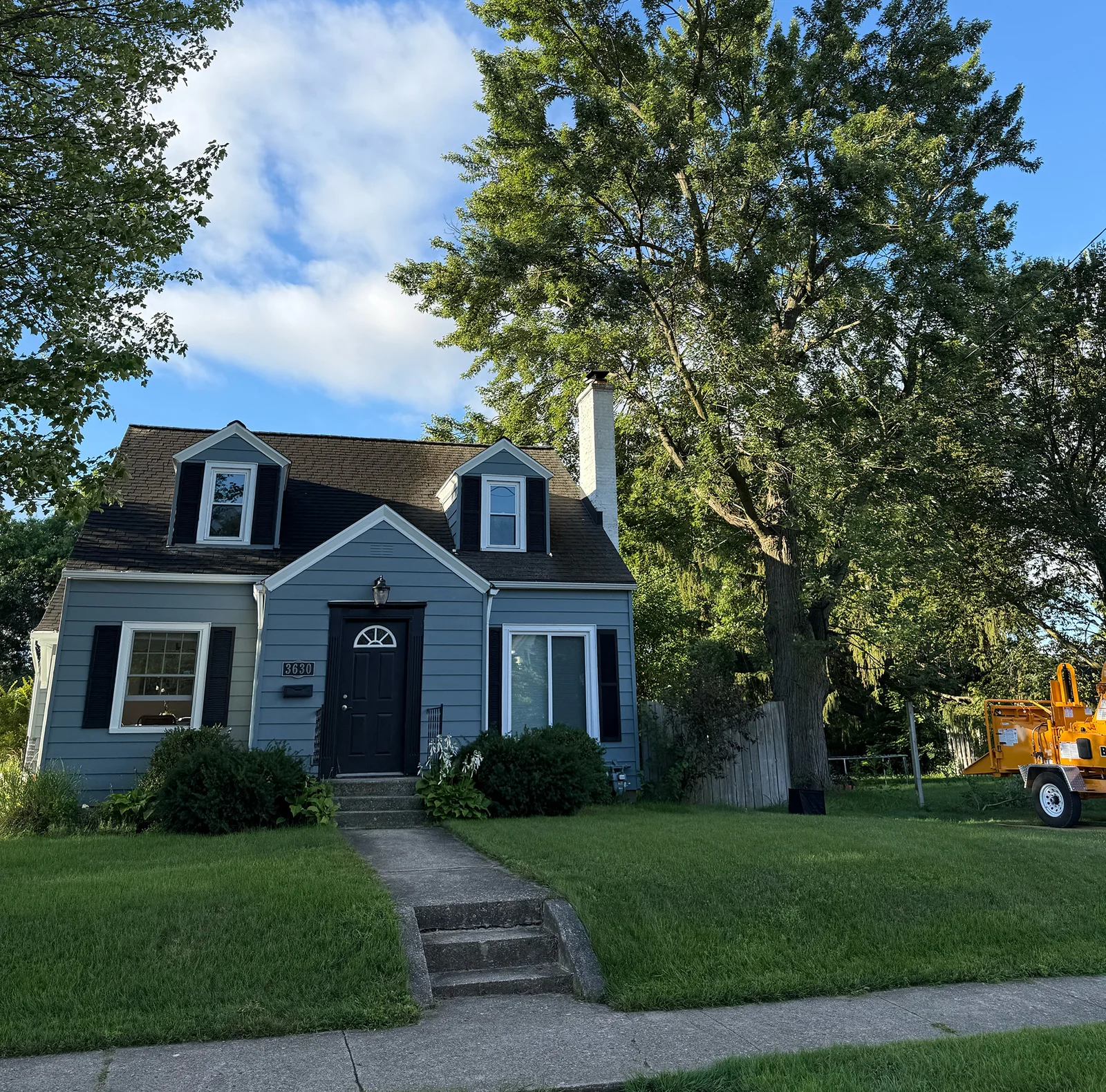
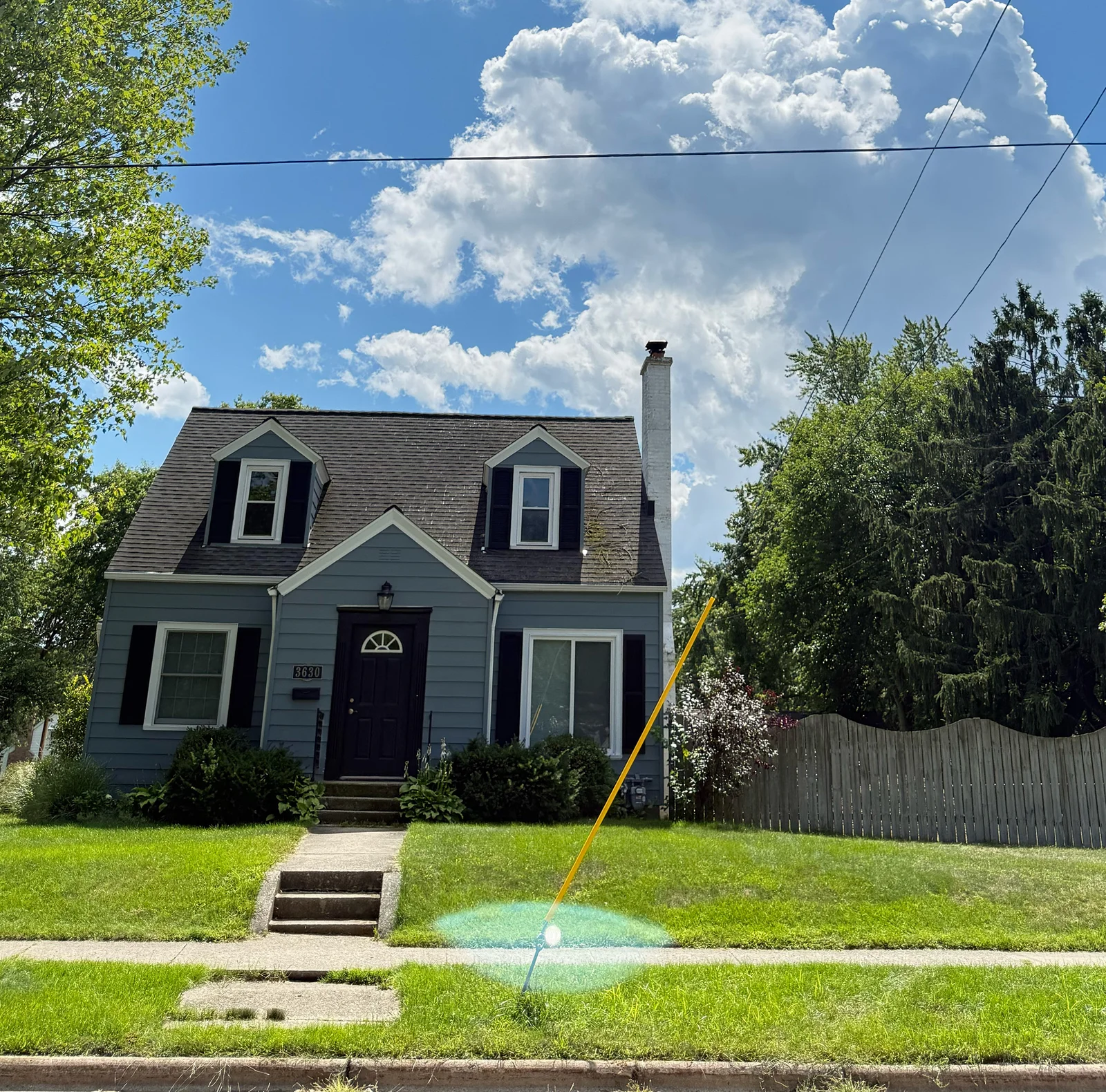
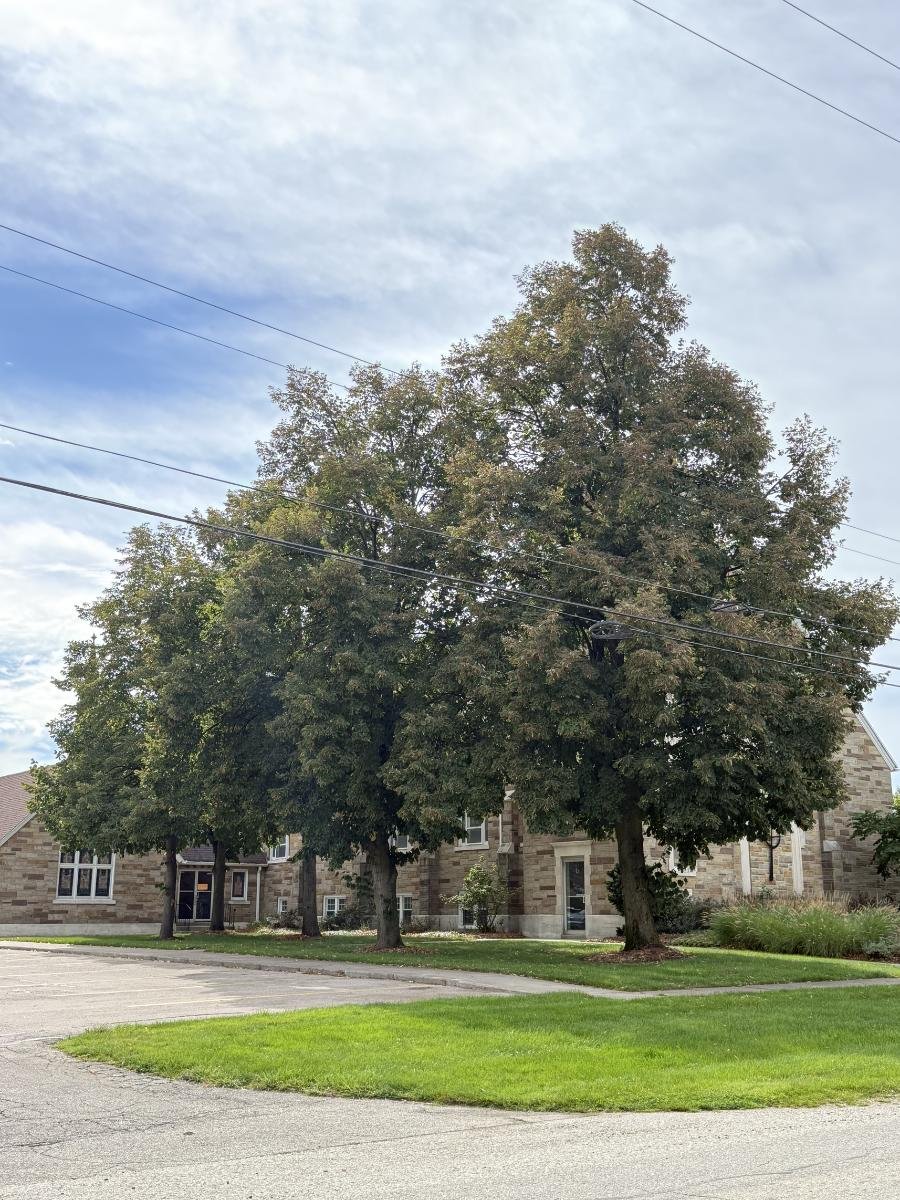
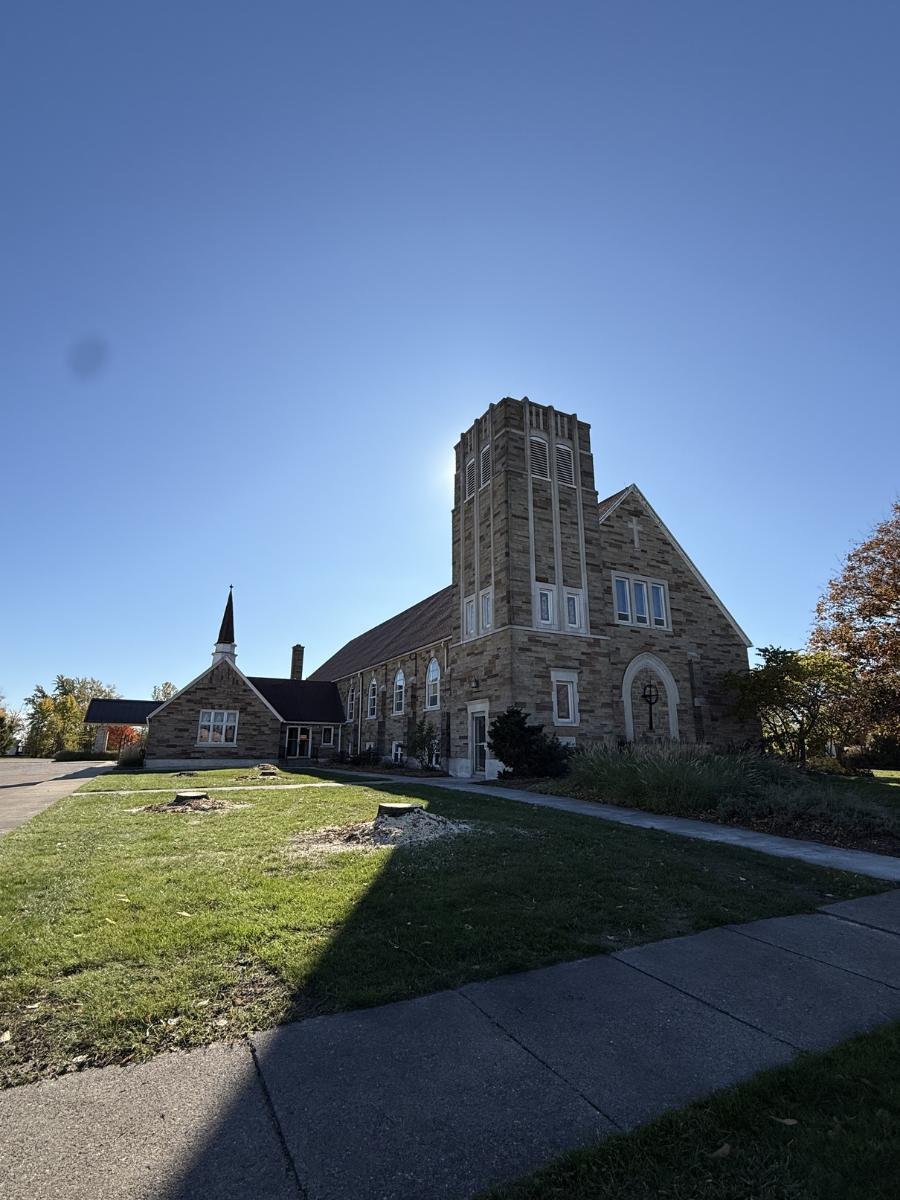
After the tree is removed, we haul away all debris, chip the brush, and rake the area. Our goal is to leave your property in better condition than we found it, even after a significant removal job.
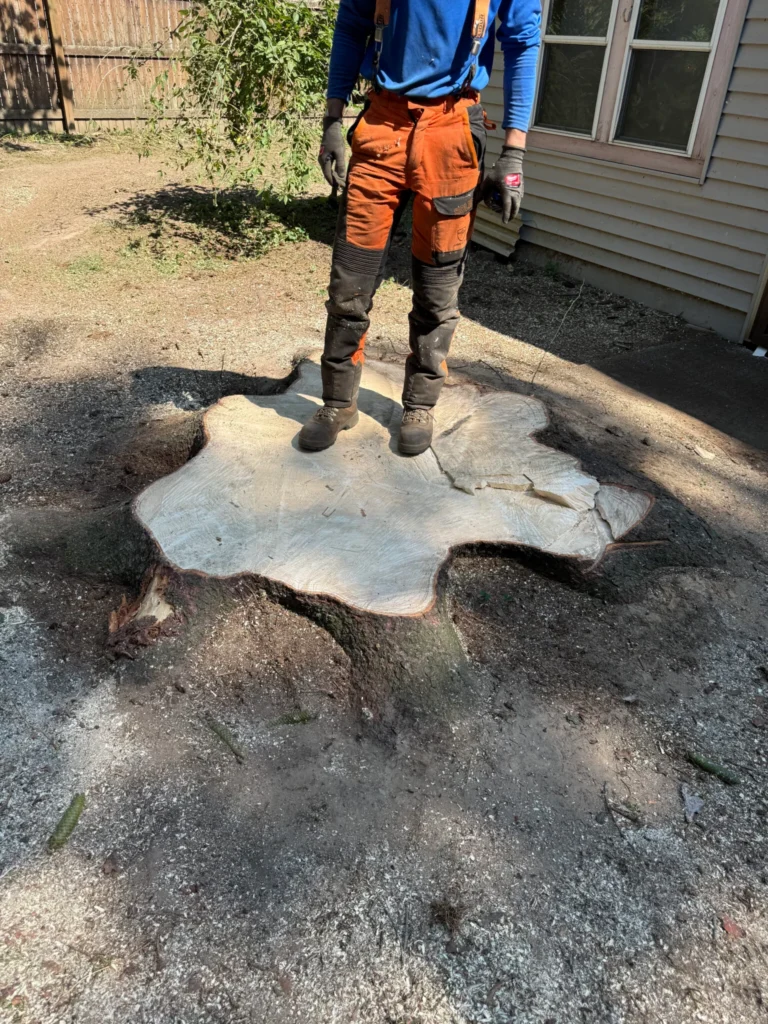
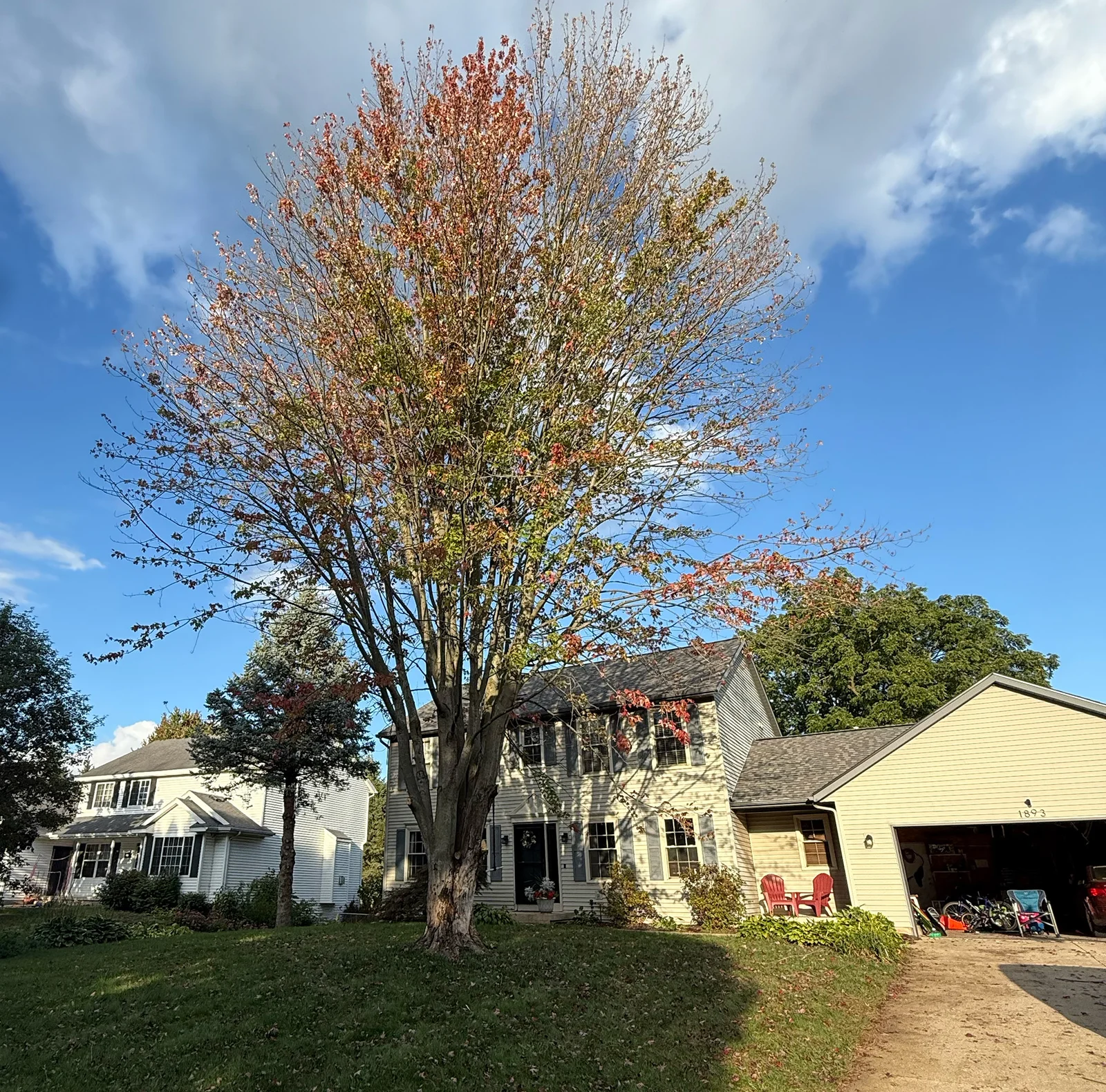
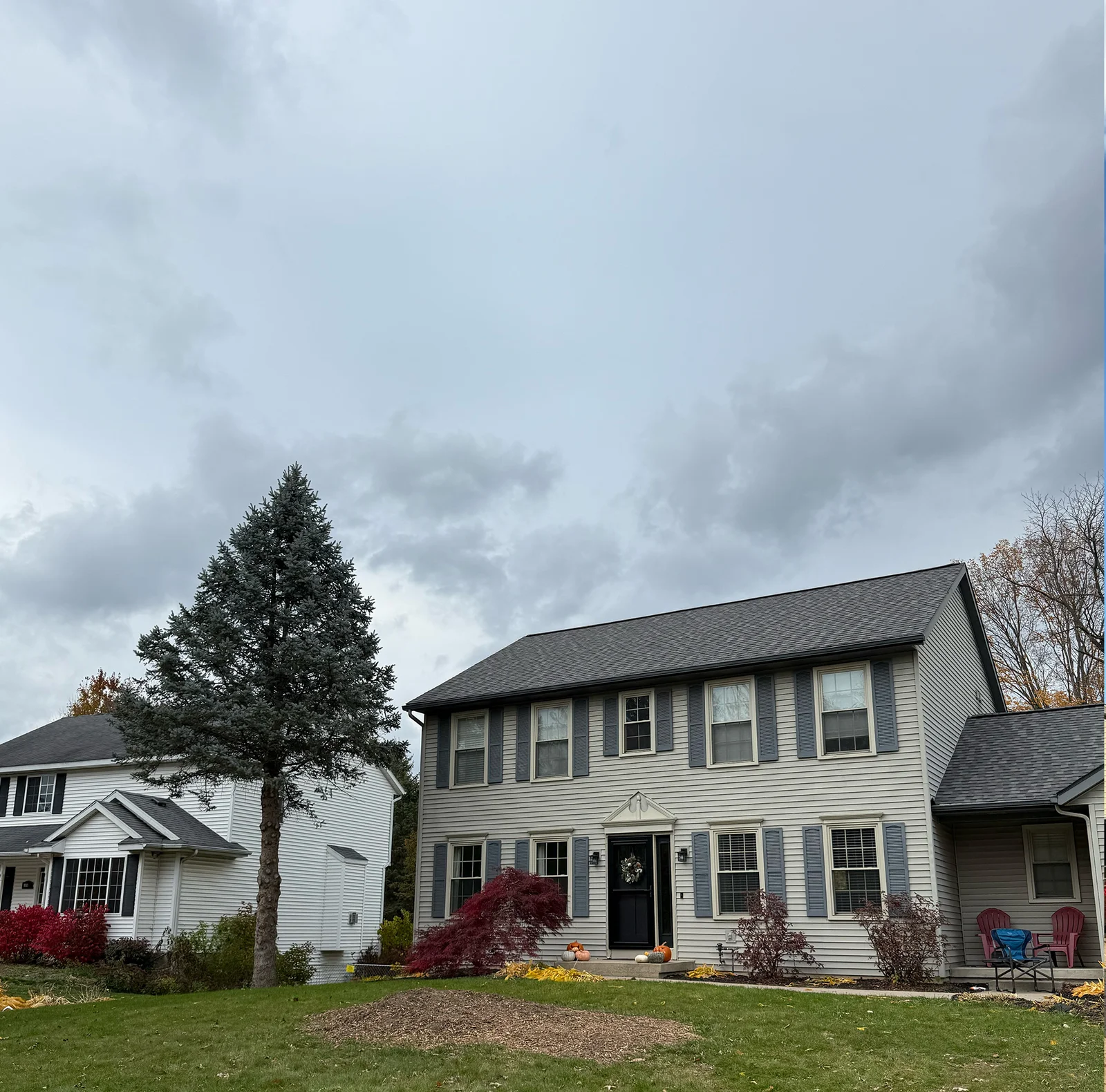
Rooted in Safety, Committed to Your Property.
Storm Tree Damage FAQs
Is it safe to stay in my house if a tree fell on the roof?
That depends on the extent of the structural damage. If there is any question about whether the structure has been compromised, contact a structural professional and your insurance company before staying inside. Do not attempt to remove the tree yourself. Call us as soon as it is safe to do so.
Will my insurance cover tree removal after a storm?
In many cases, homeowner’s insurance covers removal when a tree has fallen on a covered structure such as your home, garage, or fence. A tree that fell in the yard without hitting a structure is often not covered. Document the damage thoroughly and contact your insurance provider to open a claim. We can provide documentation to support your claim.
Why should I not try to cut the tree off my house myself?
A tree resting against a structure is under load. Cutting into it without understanding the tension points can cause the tree to shift suddenly, causing additional structural damage or injury. This is a job for a trained crew with the right equipment and a clear removal plan.
How fast can you get to my property after storm damage?
We prioritize storm damage calls involving structures and respond as quickly as our schedule allows, often within 24 to 48 hours. Fill out the contact form and we will reach out to you promptly. If the situation is immediately dangerous, indicate that in your message.
What if a utility line is involved?
Do not approach the tree or the line. Call your utility provider immediately and keep everyone in the household away from the area. We work around utility lines regularly but coordinate with providers when lines are actively involved. We will identify this during your assessment and handle coordination if required.
Can you document the damage for my insurance claim?
Yes. We can provide documentation of what was removed and how to support your insurance claim. Let us know when you contact us that you are filing a claim and we will make sure to have what you need.
What happens to the stump after the tree is removed?
Stump grinding can be added to your estimate. This is especially recommended when a tree has uprooted and left behind a large root system, or when you want to restore the area to usable ground.
Here’s What Happens Next
- 1. Tell Us About Your Project
Fill out the form with your address, the type of tree service you’re looking for, and any details that will help us understand the job.
- 2. We Schedule a Visit (Fast)
We’ll reach out to set up a time to view your property, typically within 1–2 days. You can be present, or we can assess the trees on our own if that’s more convenient.
- 3. Receive Your Free Estimate
After the site visit, we’ll email you a detailed estimate. We don’t provide pricing on-site, so you have time to review everything clearly and make the right decision.
- 4. Get on the Schedule
Once you approve the estimate, we’ll lock in your service date. On the job day, our crew works efficiently, keeps you informed, and leaves your property clean and cared for.