TL;DR: You can usually spot a hazardous tree before it fails by checking for dead limbs up top, cracks or cavities in the trunk, fungus or lifting soil at the base, and a new or worsening lean.
You walk past the same tree every day, and lately something about it nags at you. Maybe it dropped a big limb in the last windstorm, or it looks like it is leaning more than it used to. A tree that fails without warning can wreck a house or hurt someone standing under it, and by the time the problem is obvious it may already be an emergency. The good news is that most hazardous trees show signs well before they come down.
What Makes a Tree Hazardous?
A hazardous tree is one that is both likely to fail, meaning drop a limb or come down, and standing where it will hit something that matters if it does. That second part is easy to forget. A dead tree at the back of an empty field is low risk. The same tree over your bedroom, your driveway, or a spot where the kids play is a problem worth acting on.
So when you check your own trees, look at two things together: the condition of the tree, and what sits within its reach. A tree can look rough and still be low priority, while another looks mostly fine and hides a defect that puts your house in its fall path.
Warning Signs to Look For
Walk all the way around the tree and look at it from a few angles, because trouble shows up in different places. It helps to work from the top down and check each part of the tree:
- Crown (the top and canopy). Large dead branches, a dead or thinning top, or bare patches while the rest of the tree leafs out. Dieback like this means the tree is in decline, and dead limbs can drop with no warning.
- Trunk. Vertical cracks, seams, cavities, hollows, missing bark, or wood that feels soft or crumbles when you press it. Any of these can point to decay or weakness inside the trunk.
- Branch unions. Tight, V-shaped forks where two stems meet with the bark pinched inward between them. These joins are weak and can split when the tree is loaded with wind, ice, or its own weight.
- Base and roots. Mushrooms or fungus at the base, roots that have been cut or exposed, or soil that is heaving or cracking on one side. This can mean the tree is losing its hold in the ground.
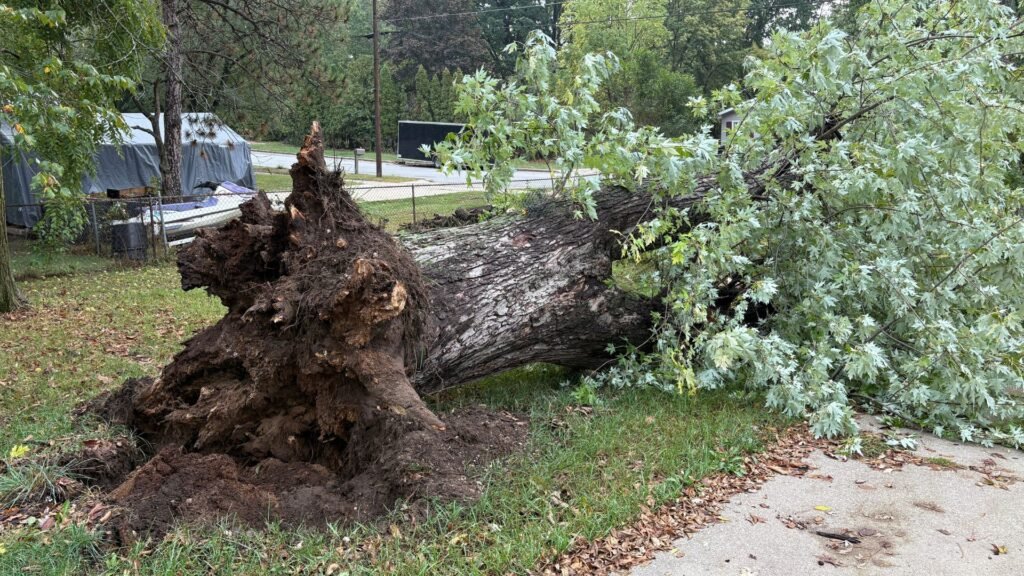
- Overall posture. A lean that is new or getting worse, especially with disturbed soil at the base, which can be a sign the tree is starting to uproot.
If you spot any of these, treat them as reasons to get the tree looked at rather than something to fix yourself. A few signs in particular deserve a same-week call:
- Hanging, cracked, or broken limbs caught up in the canopy, sometimes called widowmakers
- A sudden new lean, or soil lifting around the roots on the side opposite the lean
- Large cracks running down the trunk or through a main fork
- Mushrooms, conks, or soft, rotting wood at the base
- A dead tree, or one with a dead top, standing within reach of a building, driveway, or gathering spot
Fresh Damage After a Storm
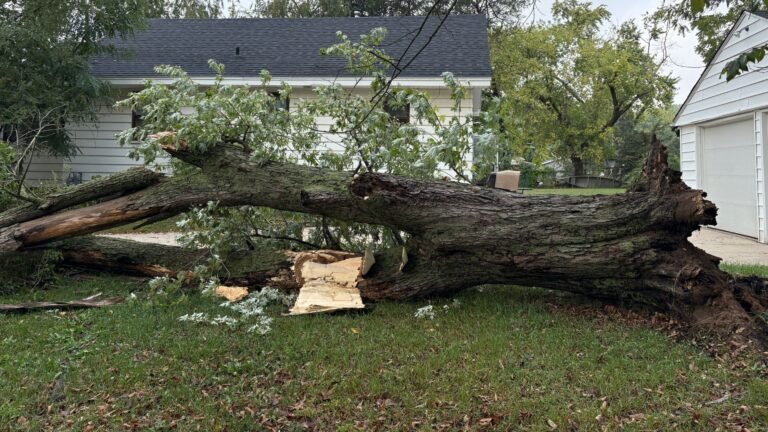
After high wind or an ice storm, do a slow walk of your property. Look up for limbs that broke but did not fall, since those can come down days later, and check trunks and major branches for cracks that were not there before. A tree that rode out the storm can still be damaged inside, and storm damage removal may be your next step.
Trees Near Power Lines
If a tree or limb is touching or hanging over a power line, treat it as an emergency and keep everyone well back. Do not try to trim or clear it, and do not put a ladder, pole saw, or anything else near the line. Call your utility company for anything in contact with their lines. For the tree itself, our emergency tree services are the right first call.
Can a Hazardous Tree Be Saved?
Not every warning sign means the tree has to come out. One with a few dead limbs but a sound trunk and healthy roots can often be made safe with tree trimming and pruning, and some weak forks can be cabled or braced so they hold. A tree with major trunk decay, failing roots, or a worsening lean toward your house is usually past that point, and tree removal becomes the safer choice. The way to know which case you have is to get it assessed in person.
What to Do If You Spot a Hazardous Tree
- Keep people and pets out from under and around the tree.
- Move cars, grills, and anything else you can out of the fall zone.
- Do not cut it, climb it, or try to pull it down yourself. Hazardous trees fail in ways that surprise even seasoned crews.
- Rope off or flag the area if you can, so no one wanders underneath.
- Get a professional assessment before you decide anything.
Get a Professional Assessment
If a tree on your property has you second-guessing it, have us take a look. We assess hazardous trees and hanging branches for homeowners and businesses across West Michigan, and the estimate is free. Catching a problem early is almost always cheaper and safer than cleaning up after the tree has come down on its own. Request your free estimate and we will get eyes on it.