TL;DR: West Roots trims oaks from December through March only. A fresh cut on an oak in warm weather draws the beetles that carry oak wilt, a fungus that can kill a red oak in one summer. The exception is a storm-damaged or hazardous limb, which we remove any time of year and seal on the spot.
If you call us in June and ask us to trim your oak, we’ll say no. We’re busy in June, but that isn’t the reason. A fresh cut on an oak in summer can kill the tree. West Roots schedules oak tree trimming in West Michigan from December through March only, and this post explains why, what the exception is, and how to plan around it.
The Problem Is Oak Wilt
Oak wilt is a fungus that clogs a tree’s water-carrying tissue. The tree walls off the infected sapwood, and the canopy wilts from the top down. Red oaks (red, black, and pin oak) can go from healthy to dead in a single summer. White oaks and bur oaks hold out longer, but they still catch it.
The fungus moves two ways. Below ground, it travels through root grafts between neighboring oaks, which is how one sick tree turns into a dead grove. Above ground, it rides on sap beetles. The beetles feed on the fungal mats that form under the bark of a dying oak, pick up spores, and fly to the next fresh wound they can find. A pruning cut is a fresh wound. In warm weather, a beetle can land on it within minutes.
Oak Wilt in West Michigan
Oak wilt was first found in Michigan in the 1950s and is now common across the Lower Peninsula. The DNR keeps an interactive oak wilt map of confirmed and reported sites, and Kent, Ottawa, and Muskegon counties all have pins on it. Pull it up and you’ll find confirmed cases within a short drive of Allendale, Hudsonville, Walker, and the rest of the area we serve. The DNR’s advice is that anyone living near a confirmed site should treat every oak on their property as at risk, whether or not the disease has turned up on their street.
Why December Through March
The beetles that spread oak wilt fly when the weather is warm, so the safe window is the stretch when they don’t.
- April 15 through July 15: The highest-risk period. The Michigan DNR tells homeowners not to prune oaks at all during these three months, and Michigan State University research puts the infection peak in May and June.
- July 16 through October: Lower risk, but the beetles are still out. Most arborists extend the no-cut rule through the whole growing season, and so do we.
- November: Close, but late warm spells happen. We’d rather give the tree a buffer than gamble on it.
- December through March: The ground is frozen or close to it, the trees are dormant, sap isn’t moving, and the beetles are gone. This is when we trim oaks.
When We Trim Oaks in West Michigan
Winter Is Also Better for the Tree
The disease is the main reason. It isn’t the only one.
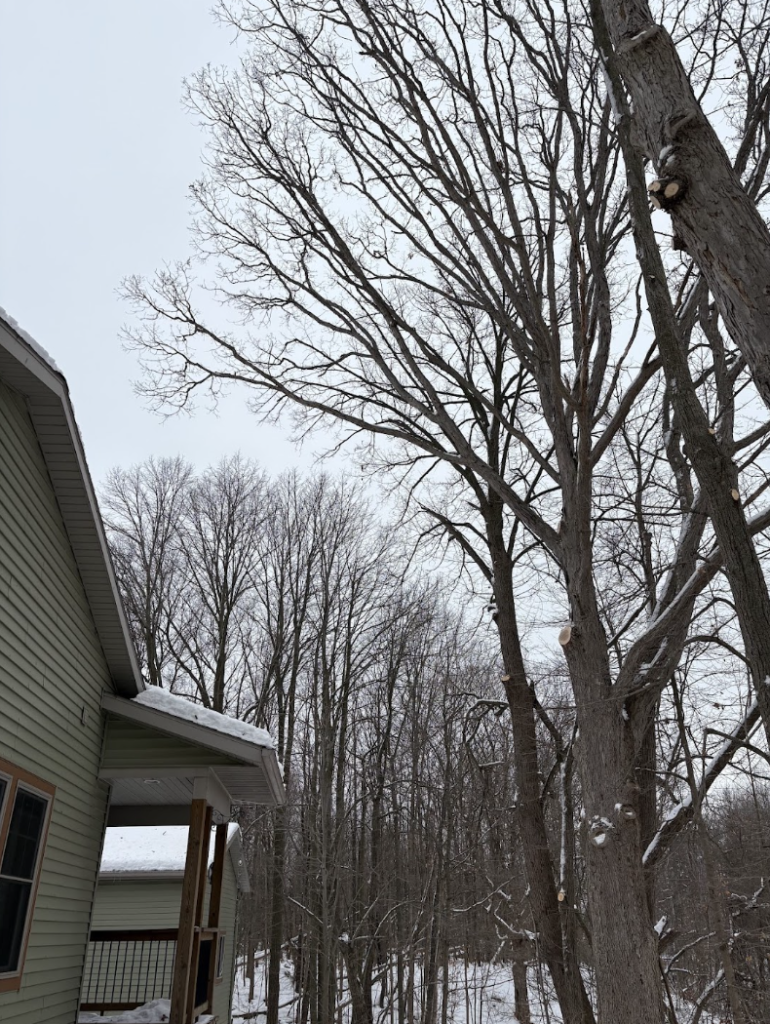
- You can see the structure. With the leaves down, crossing limbs, weak attachments, and old storm damage are easy to spot. If you’ve already walked your property with our fall storm prep checklist, you probably have a list of limbs you want gone. Winter is when we take care of the ones on your oaks.
- The tree heals faster. A cut made during dormancy starts sealing over as soon as growth picks up in spring, with no weeks of exposure in warm weather.
- Your lawn comes through it clean. Frozen ground holds up under equipment far better than spring mud. We use ground protection either way, but winter makes it easy.
Emergency Oak Limbs in Summer
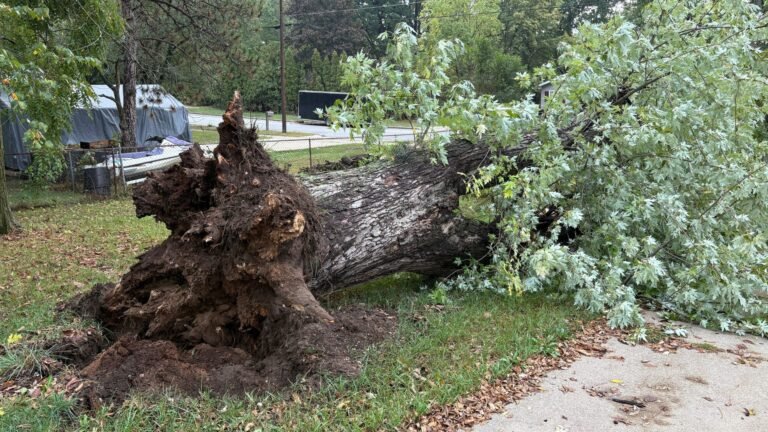
If an oak limb cracks, splits, or comes down on your house in summer, our storm and emergency crew will come out. A hanging limb over a roof or driveway is a bigger risk than the cut. What changes is how we handle it:
- We cut only what has to go. The broken or hanging limb comes off. Shaping and anything else cosmetic waits for December.
- We make the smallest cut possible. Less exposed wood means less surface for a beetle to find.
- We seal the wound before we leave. Every cut gets pruning paint or latex paint, which is what the DNR recommends for any oak wounded during the risk period. On a healthy tree we’d never paint a cut, since sealing slows healing. On an oak in beetle season, the paint blocks the scent that draws beetles to fresh sap, and that trade is worth making.
That’s the full extent of our summer oak work.
How Often Oaks Need Trimming
Mature oaks don’t need much. Every three to five years is typical, and some healthy trees with no structural problems can go longer. What you’re paying for at that interval is deadwood removal and clearance from the roof, power lines, and whatever else the canopy has grown into. Oaks are big and heavy, so the same factors that drive trimming costs on any tree count for more here: height, how close we can get the chipper, and what’s underneath the limbs we’re cutting.
Young oaks are a different job. Pruning a tree in its first 10 to 15 years to set up good branch spacing and a single strong leader heads off the expensive problems: codominant trunks, included bark, limbs that grow out over the house. A few small cuts now save a crane later.
Signs You Should Call Sooner
Oak wilt shows up in summer, the one time we can’t trim. If you see any of the following on an oak, call us for an assessment instead of waiting for December:
- Leaves turning brown or bronze from the outer edge inward, starting at the top of the canopy
- Green or partly green leaves dropping in June or July
- Dieback spreading through the crown over a few weeks
- Vertical cracks in the bark with a gray or black mat underneath (on red oaks, usually the year after infection)
Not every dying oak has oak wilt. Drought stress, construction damage, and plain old age look similar from the ground, which is why we look at the tree before we talk about taking it down. A confirmed case changes the plan. Infected red oaks usually need removal, and nearby oaks may need their root connections cut to stop the spread. We can do that assessment any time of year. If the tree does come out, the firewood stays on the property until it has dried for a year or the bark has fallen off. Before then, it can carry the fungus to the next yard.
Trimming an Oak on Your Own
Small, low branches on a young oak during the window, with clean tools, are fine to handle on your own. Anything that puts you on a ladder or over a structure is a job for a crew. And whatever you do, don’t prune an oak between April and November, don’t move oak firewood from a tree that died suddenly, and don’t leave fresh oak wounds open in warm weather.
Plan It Now, Trim It This Winter
The December through March window fills up, and once it closes we can’t make exceptions for routine work. If your oaks need attention, fall is the time to get on the list. Request a free estimate and we’ll come out, look at the trees, and email you a quote. If you also have maples, pines, or anything else that needs trimming or pruning, we can fold those into the same winter visit. Once the beetles are gone, your oaks go on the first open date.
If you call us in June and ask us to trim your oak, we’ll say no. We’re busy in June, but that isn’t the reason. A fresh cut on an oak in summer can kill the tree. West Roots schedules oak tree trimming in West Michigan from December through March only, and this post explains why, what the exception is, and how to plan around it.