TL;DR: Stump grinding shaves the stump down below the soil line and leaves the roots to break down on their own. Stump removal pulls the stump and root ball out of the ground, and that only works on small stumps from saplings, shrubs, and hedges. For most tree stumps, grinding is the answer. It’s faster, costs less, and is easier on your lawn.
The tree is gone, and that spot in your yard is open for something new: fresh grass, a garden bed, a replacement tree, or the patio you’ve been sketching out since spring. Whether the tree came out last week or a storm took it a few years ago, one thing stands between you and those plans, and that’s the stump.
Before anyone shows up with equipment, it helps to know the two ways to deal with a stump and what each one leaves behind.
What Stump Grinding Does
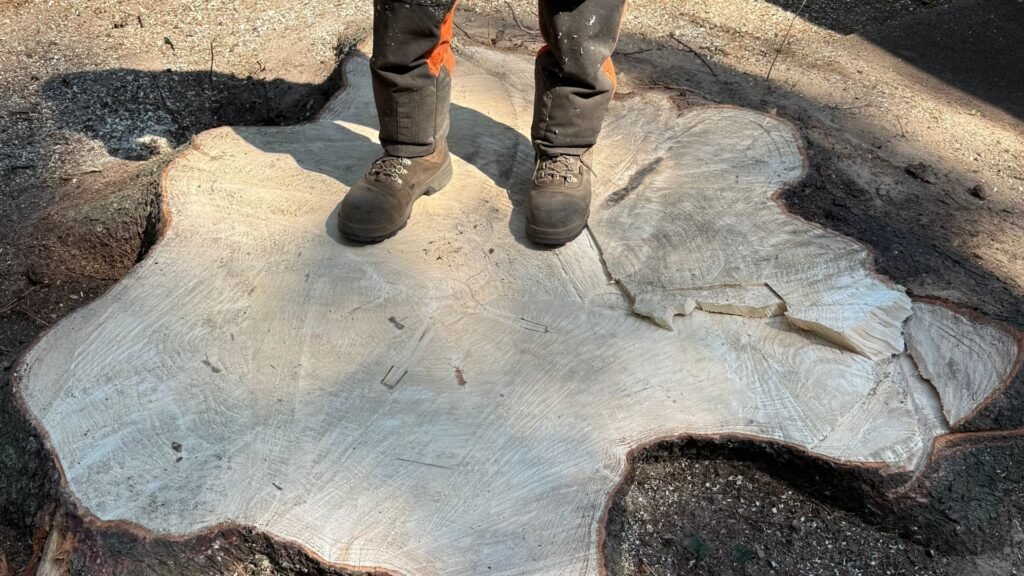
A stump grinder has a spinning steel wheel lined with carbide teeth. The operator sweeps the wheel back and forth across the stump and shaves it into wood chips until it sits below ground level.
When the grinder shuts off, you have:
- A shallow hole filled with chips. The stump is gone below the surface, typically 6 inches down and up to 30 inches if your plans call for it.
- Roots still in the ground. The main roots stay underground. Without the stump, they stop growing and slowly decompose.
- A pile of wood chips. Keep them for mulch or have us haul them away.
Depending on the stump’s size, the grinding itself takes anywhere from a few minutes to about an hour, meaning most stump grinding jobs wrap up in a single visit.
What Stump Removal Does
Full stump removal means pulling the stump and its root ball out of the ground. It’s an option for smaller stumps, like the ones left by saplings, bushes, and hedges, where the root mass is small enough to dig out and lift.
Once it’s out, you have:
- A hole to fill. Pulling the root ball leaves a hole that has to be backfilled with soil and compacted.
- Disturbed soil and turf. Digging out the roots tears up the ground around the stump.
- No root mass under the spot. The roots come out with the stump, so nothing is left to decompose.
A mature tree’s root system spreads too wide and too deep to pull out. That’s why grinding is the standard method for tree stumps. When your plans for the space call for it, we grind deeper.
Stump Grinding vs. Stump Removal at a Glance
| Stump Grinding | Stump Removal | |
|---|---|---|
| The stump | Shaved into chips below ground level | Dug out and pulled from the ground |
| The roots | Stay underground and decompose over time | Come out with the stump |
| Your yard | Small footprint around the stump | Larger hole and disturbed soil around it |
| Time on site | A few minutes to about an hour per stump | Longer, plus time to backfill the hole |
| Cleanup | Chips kept as mulch or hauled away | Soil, roots, and debris hauled; hole filled |
| Cost | Usually the lower-cost option | Higher, due to labor, equipment, and fill |
| Good fit for | Nearly all tree stumps, lawns, beds, replanting, hardscapes | Small stumps from saplings, shrubs, and hedges |
What Happens to the Roots After Grinding
The roots stay in the soil, but without the stump, they can’t grow. Grinding below the soil line stops the stump from sprouting again, and over the next few years the leftover roots decompose.
As they break down, the ground above them can sink a little. Top off any low spots with soil when you see them. Grinding also takes away the decaying wood that draws carpenter ants, termites, and beetles.
Which Method Fits Your Plans?
What you want to do with the spot decides the method more than anything else.
Laying Sod or Reseeding
Grind it. Rake out most of the chips, fill the hole with topsoil, and tamp it down before you seed or lay sod. Don’t leave a thick layer of fresh chips under new grass. As wood breaks down, it pulls nitrogen from the soil, and that patch can come in yellow and thin. Plan to add a bit more soil as the ground settles.
Planting a Garden Bed
Grinding works here too. Once you’ve mixed in fresh soil underneath, the chips can go right back on top as mulch.
Replanting a Tree
Grinding usually works. Your new tree will get a better start a few feet away from the old stump, where its roots won’t have to fight through old roots and chips. If you want it in the same spot, tell us at the estimate. Depending on the size and type of tree you’re planting, we can grind deeper to make room.
Building a Patio, Walkway, or Shed
Ask for a deep grind. Pavers and shed bases sit on a compacted gravel base, and decaying roots underneath can cause dips over time. Tell us what’s going on top, and we’ll grind deeper and clear the larger surface roots in the footprint. If the stump is from a shrub or small tree, we may be able to pull it out entirely.
Pouring a Foundation, Driveway, or Slab
Decaying wood under concrete can leave voids that lead to cracking, so the goal is to get as much wood out of the footprint as possible. That means grinding deep and clearing the surface roots. We can grind up to 30 inches below the surface depending on the job. If you’re clearing ground for new construction, our Land & Lot Clearing team handles stumps across the whole site.
What About DIY Stump Removal?
If you’ve searched for ways to get rid of a stump yourself, you’ve probably come across a few of these.
| Method | How long it takes | The catch |
|---|---|---|
| Chemical stump remover | Several weeks at best, often months | Only speeds up rot. You still have to chop, dig, or burn out what’s left. |
| Burning | Hours to days, plus cleanup | Many West Michigan communities restrict open burning, and roots can smolder underground. |
| Renting a grinder | An afternoon, plus pickup and return | Heavy, hard to control, and throws debris. A mistake can damage a fence, siding, or a buried line. |
| Digging it out by hand | Hours to a full weekend | Fine for shrubs and small stumps. Mature tree roots are too big to dig out by hand. |
| Leaving it to rot | Years | The stump stays in your way and keeps drawing ants, termites, and beetles the whole time. |
Before you try any of these, call MISS DIG 811. Michigan law calls for a utility locate before any digging, and gas, electric, and cable lines are often closer to the surface than people expect. If you’re thinking about burning, check your city’s rules first. Grand Rapids and many surrounding townships limit or ban open burning, and the rules change from one community to the next.
Questions to Answer Before You Decide
Think through these before your estimate so we can recommend the right approach:
- What’s going in this spot in the next year or two?
- Is the stump close to a fence, foundation, sidewalk, or landscaping?
- Do you want to keep the wood chips?
- Do you have other stumps? Grinding several in one visit typically lowers the cost per stump.
Having a Tree Taken Down Soon?
If you’re already planning a tree removal, that’s the easiest time to deal with the stump. Mention it during the estimate, and we’ll include grinding in the same quote. The removal portion depends on the tree’s size, how easily our equipment can reach it, and how close it stands to your house, the same factors that affect tree removal pricing on any job.
Not Sure Which One You Need? We’ll Come Take a Look
Every stump is a little different, and the right method depends on what’s underground and what’s coming next. We grind stumps across Greater Grand Rapids, including Allendale, Hudsonville, Grandville, Wyoming, Walker, Byron Center, Ada, Belmont, Grand Haven, and Holland. Not sure if you’re in range? Check our service areas or reach out.
Request a free on-site estimate, and we’ll typically visit your property within 1–2 days. You don’t need to be home. We’ll look at the stump, ask about your plans for the space, and email you a detailed estimate covering any of our stump services that fit the job.